Polynucleotides in Munich | PhilArt with Dr. Eva Maria Strobl
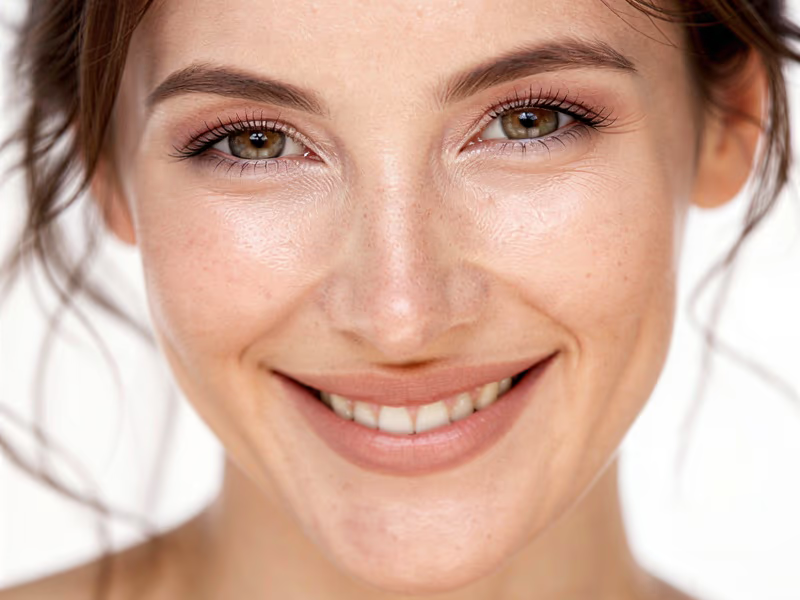
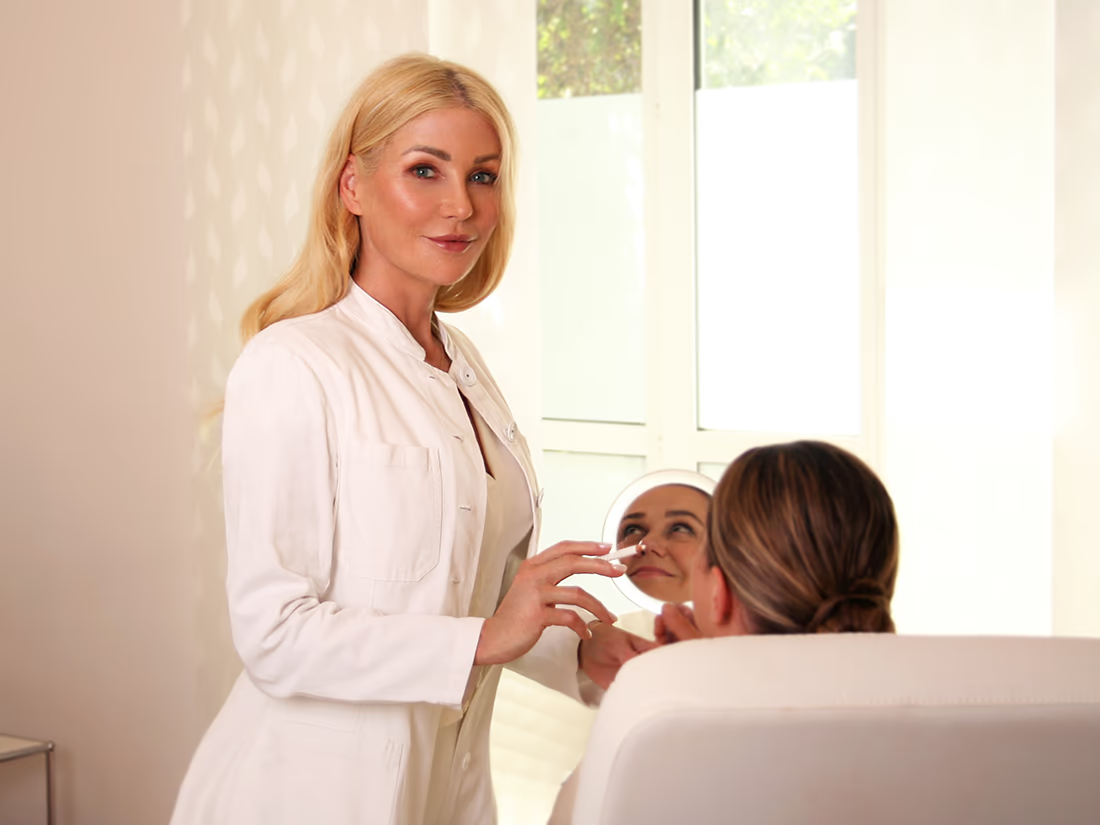
Polynucleotides are a modern treatment designed to improve skin quality. They are injected into the skin with very fine needles and are intended to support natural regeneration.
In my practice in Munich, I mainly use polynucleotides when the skin appears tired, dry, thin or stressed. The treatment is particularly interesting for the eye area, fine crepey lines, dull skin and patients who want a fresher appearance without additional volume.
Polynucleotides do not change the face. They do not build up the cheeks and do not replace a filler. Their goal is calmer, more elastic and visibly refreshed skin.
Polynucleotides at a Glance
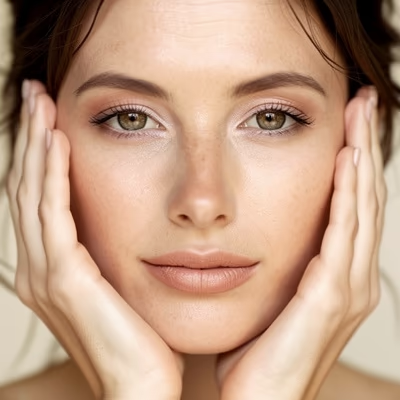
- Treatment goal: improvement of skin quality, hydration, elasticity and regeneration
- Suitable for: face, neck, décolleté, hands, scalp
- Treatment: fine injections into the skin
- Treatment duration: approx. 20–30 minutes
- Anaesthesia: numbing cream on request
- Downtime: usually none
- Possible reactions: redness, small wheals, swelling, bruising
- Sessions: usually 2 to 3 treatments spaced a few weeks apart
- Result: develops gradually over several weeks
- Costs: from €320 per session, depending on the area and amount of product required
What Are Polynucleotides?
Polynucleotides are small building blocks made from DNA fragments. In aesthetic medicine, they are used as an injectable gel to support the skin from within.
Polynucleotides can be understood as regenerative active substances. They are not intended to fill the skin like a traditional dermal filler. Instead, the focus is on cellular activity, hydration, tissue repair and improved skin texture.
Many products are derived from highly purified marine sources. This is why terms such as “salmon DNA” or “salmon sperm treatment” are often used online. From a medical perspective, the more appropriate terms are polynucleotides or PDRN.
Who Is a Polynucleotide Treatment Suitable For?
I mainly recommend polynucleotides for patients who do not want a significant change in their face, but would like better skin quality.
The treatment may be useful for:
- tired, dull skin
- dry or stressed skin
- fine crepey lines
- thin skin under the eyes
- dark shadows under the eyes
- reduced elasticity
- small acne scars
- sun-damaged skin
- skin that generally appears irritated or tired
- scalp treatments for thinning hair, depending on the individual findings
Polynucleotides are well suited to patients who want to look natural. After treatment, the face should not look “done”; ideally, it looks fresher, calmer and more rested.
Which Areas Can Be Treated with Polynucleotides?

Face
On the face, polynucleotides are particularly suitable for dull skin, small lines, dryness and reduced firmness. Treatment may include the cheeks, lateral facial areas, mouth area or chin area.
Neck and Décolleté
The neck and décolleté often show fine lines and dryness early on. In these areas, polynucleotides can help improve skin quality without adding volume.
Hands
The hands can also be treated if the skin appears thinner, drier or older. In cases of significant volume loss, however, hyaluronic acid or other treatments are often more suitable.
Scars and Acne Scars
For small acne scars or uneven skin texture, polynucleotides can be a useful addition. I often combine such treatments with microneedling, PRP or other regenerative procedures.
Scalp
Special polynucleotide products can also be used on the scalp. The goal here is not to reliably restore lost hair, but to support the scalp and improve tissue quality. Whether this is appropriate depends strongly on the individual findings.
Which Polynucleotides Do I Use?
In my practice in Munich, I primarily use modern polynucleotide products by Croma, especially PhilArt and the new PolyPhil line.
These products were developed for different areas. There are variants for the eye area, the face, skin with greater regenerative needs and the scalp.
Croma Juvenus was an earlier polynucleotide product that I have already discussed on my website. Today, for practical use, the further development toward PhilArt and PolyPhil is particularly relevant. The focus is less on “filling wrinkles” and more on skin regeneration, skin quality and natural freshness.
Polynucleotides or Hyaluronic Acid?
Polynucleotides and hyaluronic acid have different purposes.
- Hyaluronic acid fillers restore volume. They can shape the lips, support the cheeks, correct the tear trough or improve contours.
- Polynucleotides primarily improve skin quality. They do not add significant volume, but support hydration, elasticity and regeneration.
For some patients, hyaluronic acid is the right choice. For others, polynucleotides are better. Sometimes a combination is also useful.
Polynucleotides or Botox?
Botox relaxes muscles. It is particularly suitable for expression lines, for example on the forehead, frown lines or crow’s feet.
Polynucleotides do not relax muscles. They improve the skin itself.
If a line is mainly caused by facial expression, Botox is often more effective. If the skin is thin, dry or crepey, polynucleotides may be more appropriate.
Polynucleotides or Skinboosters?
Skinboosters such as Skinvive or Profhilo also improve hydration and skin quality. However, they work differently.
Hyaluronic acid-based skinboosters mainly bind water and provide more hydration. Polynucleotides focus more strongly on regeneration and tissue repair.
In practice, the question is therefore not: which is better? The real question is: what does your skin need right now?
For dry skin, a skinbooster can be very useful. For thin, irritated skin or skin in need of regeneration, polynucleotides may be the better choice.
Polynucleotides or PRP?
PRP is obtained from your own blood. It contains platelets and growth factors. Polynucleotides are a ready-to-use medical product.
Both treatments have a regenerative goal. PRP is particularly interesting for patients who prefer an autologous blood treatment. Polynucleotides are a good alternative for those who want a standardized, readily available treatment.
For certain findings, a combination may also be useful.
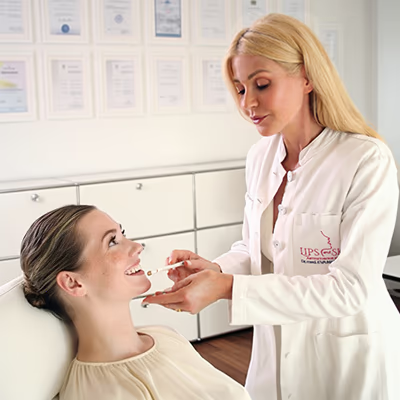
Treatment Procedure
First, I examine your skin carefully. What matters is not only an individual line, but the overall skin quality: thickness, hydration, elasticity, sensitivity, shadows and texture.
I then discuss with you which product and which treatment area are appropriate.
Before treatment, the skin is cleansed and disinfected. A numbing cream can be applied on request. I then inject the product into the skin in small points using very fine needles.
Immediately afterwards, small wheals, redness or mild swelling may be visible. This is normal and usually settles quickly.
When Will I See the Result?
Polynucleotides do not work like a traditional filler. The result is not immediately visible as volume.
Many patients notice more freshness or calmer skin after a few days. However, the actual effect develops over several weeks. Gradually, the skin appears more elastic, smoother and more rested.
Several sessions are usually useful for a stable result.
How Long Does the Result Last?
Longevity varies from patient to patient. Many patients plan a refresh treatment after 6 to 12 months.
Important: polynucleotides improve skin quality, but they do not stop the natural ageing process. UV exposure, smoking, sleep, stress, hormones and skincare can significantly influence the result.
How Many Sessions Are Recommended?
In most cases, I recommend 2 to 3 sessions spaced about 3 to 4 weeks apart.
For very thin, stressed or mature skin, more sessions may be useful. Afterwards, the result can be maintained with a refresh treatment every 6 to 12 months.
The exact plan depends on the condition of the skin, the treatment area and the desired result.
What Side Effects Are Possible?
Polynucleotides are generally well tolerated. However, this is still an injectable treatment. Side effects can therefore occur.
Possible side effects include:
- redness
- burning
- small wheals
- swelling
- a feeling of pressure
- bruising
- itching
- small irregularities
- rarely infection or inflammation
- very rarely allergic reactions
Particular care is required when treating the eye area. The skin there is thin, and swelling becomes noticeable more quickly.
Who Are Polynucleotides Not Suitable For?
Treatment with polynucleotides is generally not suitable in the following cases:
- pregnancy
- breastfeeding
- acute skin infections in the treatment area
- active inflammation
- known allergy to ingredients of the product
- relevant fish allergy, depending on the product
- unclear autoimmune processes
- severe coagulation disorders
- unrealistic expectations
If you regularly take blood-thinning medication or tend to develop significant swelling, I will discuss this with you in advance.
How Much Does a Polynucleotide Treatment Cost in Munich?
The costs depend on the product, the area treated and the amount of product required.
As a guideline in my practice:
Polynucleotides from approx. €320 per session
Treatment of the eye area usually requires less product than a larger treatment of the face, neck or décolleté. I will discuss the exact price with you transparently before treatment.
Billing is based on the German medical fee schedule.
Why Polynucleotides at LIPS and SKIN in Munich?

In my practice in Munich, I perform every treatment personally. This also applies to polynucleotides.
It is important to me that the result remains natural. I do not treat according to trends, but according to the clinical findings. Sometimes polynucleotides are ideal. Sometimes a skinbooster, PRP, Botox or hyaluronic acid is more suitable. And sometimes a combination is the best solution.
I am particularly cautious when assessing the eye area. Not every shadow under the eyes is the same. Not every tear trough should be treated with filler. And not every case of thin skin can be improved with a single method.
My goal is fresh, well-cared-for skin quality without visibly changing the face.

Consultation and Appointment
Would you like to find out whether polynucleotides are right for you? I will advise you individually and honestly.
All you need is an email address and a phone number.
FAQ – Polynucleotides in Munich
Polynucleotides are small DNA building blocks used in aesthetic medicine for skin regeneration. They are injected into the skin and are intended to support hydration, elasticity and repair processes.
PDRN is a specific form of DNA fragments. In aesthetics, polynucleotides and PDRN are often used in a similar way, but they are not exactly the same in every product. For patients, the most important question is which product is suitable for which area.
Many polynucleotide products are obtained from highly purified DNA fragments of marine origin. This is why people often colloquially refer to salmon DNA or salmon sperm. The finished medical product is purified and medically processed.
Only to a very limited extent. Polynucleotides are not traditional volume fillers. If the cheeks, chin, lips or jawline are to be enhanced, hyaluronic acid is usually more suitable.
No. Hyaluronic acid and polynucleotides have different purposes. Hyaluronic acid can add volume and contour. Polynucleotides mainly improve skin quality and regeneration.
No. Botox relaxes muscles and smooths expression lines. Polynucleotides improve skin texture, but they do not have a muscle-relaxing effect.
In a broader sense, yes, because they improve skin quality. In a narrower sense, however, they differ from classic hyaluronic acid skinboosters because the regenerative effect is more central.
That depends on the condition of the skin. Profhilo is very interesting for loss of hydration and reduced elasticity. Polynucleotides may be more useful when the skin appears thin, stressed or in need of regeneration.
Skinvive is a hyaluronic acid skinbooster and primarily improves hydration and glow. Polynucleotides focus more strongly on regeneration. For dry skin, Skinvive can be a very good fit; for thin or sensitive skin, polynucleotides may be more suitable.
PRP is an autologous blood treatment. Polynucleotides are a ready-to-use medical product. Both can support skin regeneration. Which method is more suitable depends on the clinical findings and your preferences.
Yes, the eye area is a common treatment area. The treatment may be useful for thin skin, crepey lines and certain dark shadows. A very precise indication is important.
They can help if dark circles are partly caused by thin, tired or poorly regenerated skin. If dark circles are mainly caused by a deep tear trough, bone structure or pigmentation, this treatment alone is often not sufficient.
For true under-eye bags, polynucleotides are usually not sufficient. Under-eye bags are often caused by fat pads, tissue laxity or lymphatic congestion. Careful differentiation is essential.
Polynucleotides can improve fine lines and crepey lines. However, deep wrinkles or volume loss cannot be reliably corrected with them. Other methods are often more suitable for this.
Polynucleotides are not a classic treatment for pigmentation spots. If the skin becomes calmer and more regenerated overall, the complexion may appear more even. True pigmentation disorders usually require other treatments.
For sensitive, irritated skin, a regenerative treatment may be of interest. However, rosacea is a medical skin condition and must be assessed individually. Active inflammation should not simply be injected.
Yes. This can be useful when expression lines and poor skin quality are present at the same time. Botox smooths expression lines; polynucleotides improve the skin.
Yes. Hyaluronic acid can improve volume or contour, while polynucleotides improve skin quality. However, the treatments should be planned carefully and not combined indiscriminately.
Yes, depending on the findings, this can be useful. Both procedures aim to support regeneration. The exact interval should be determined individually.
Yes. The two procedures can complement each other. Whether this is necessary depends on the skin condition and the treatment goal.
Allergic reactions are rare, but possible. In cases of known fish allergy or allergy to ingredients of the product, treatment must be assessed particularly carefully or avoided.
This must be decided individually. I am cautious in cases of active or unclear autoimmune processes. Safety comes first.

About the Author:
Dr. med. univ. Eva Maria Strobl is the owner of LIPS and SKIN Aesthetic Medicine in Munich. She is a board-certified specialist in general medicine (MedUni Wien) and has specialized in non-surgical aesthetic procedures for more than 10 years. She is a member of the German Society for Aesthetic Botulinum Therapy (DGBT), the German Society of Anti-Aging Medicine (GSAAM) and the Network Global Health. She regularly publishes articles on her blog and on DocCheck.
Sources for This Article:
Agolli et al, Hybrid cooperative complexes of high and low molecular weight hyaluronans (Profhilo®): review of the literature and presentation of the VisionHA project, Link
Alexiades et al., A Randomized, Multicenter, Evaluator-blind Study to Evaluate the Safety and Effectiveness of VYC-12L Treatment for Skin Quality Improvements, Link
Chiu et al., Improved Patient Satisfaction With Skin After Treatment of Cheek Skin Roughness and Fine Lines With VYC-12L: Participant-Reported Outcomes From a Prospective, Randomized Study, Link