
Botox in Munich |
Wrinkle Treatment with Botulinum Toxin
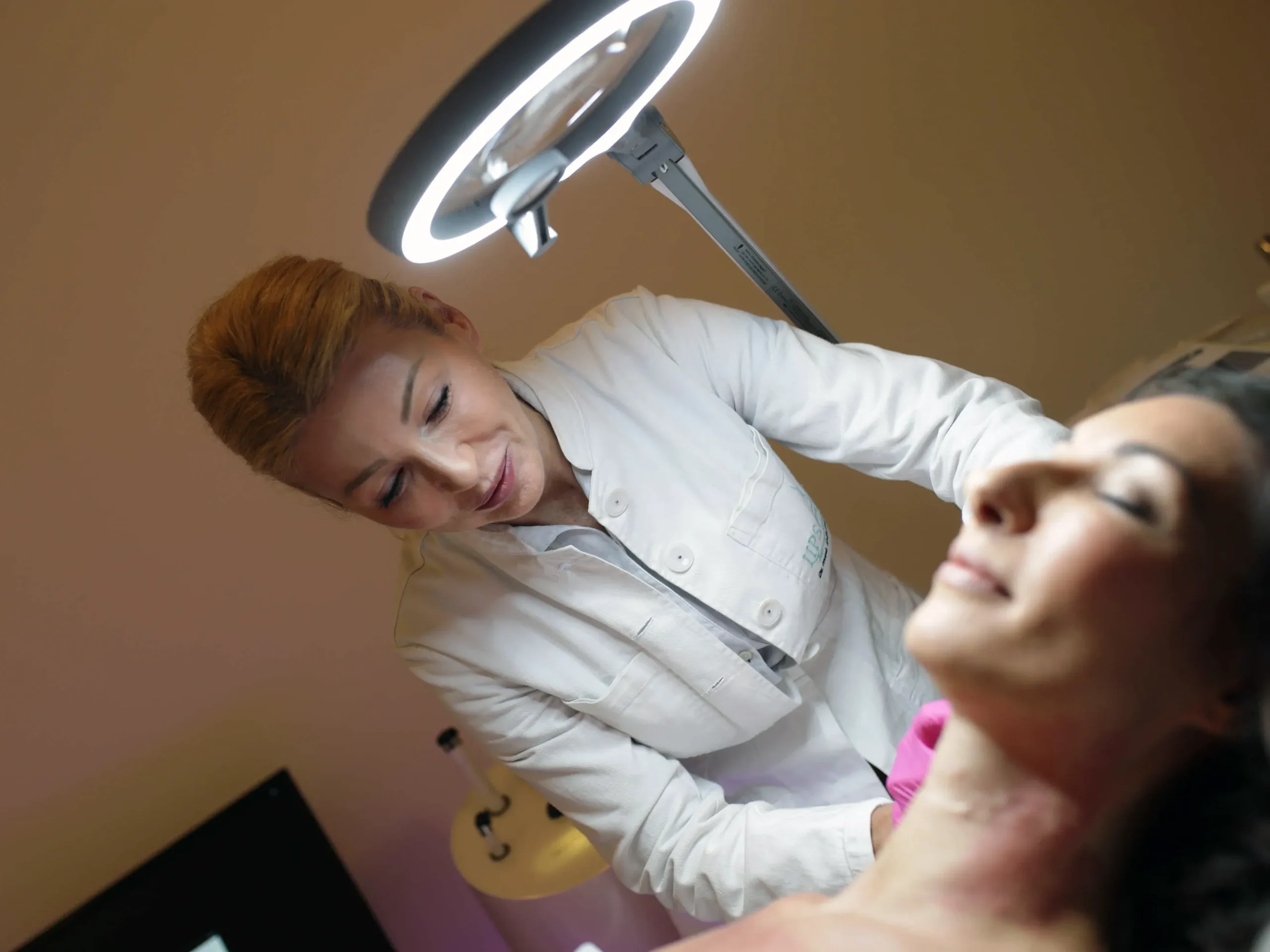
Dynamic expression lines are a natural part of the face. They form when we smile, frown, or squint. At a younger age, this is usually not an issue: the skin smooths out easily. Over time, however, these lines may become visible even at rest. Many patients then want to look fresher and more relaxed, but they do not want to look different or “overdone.”
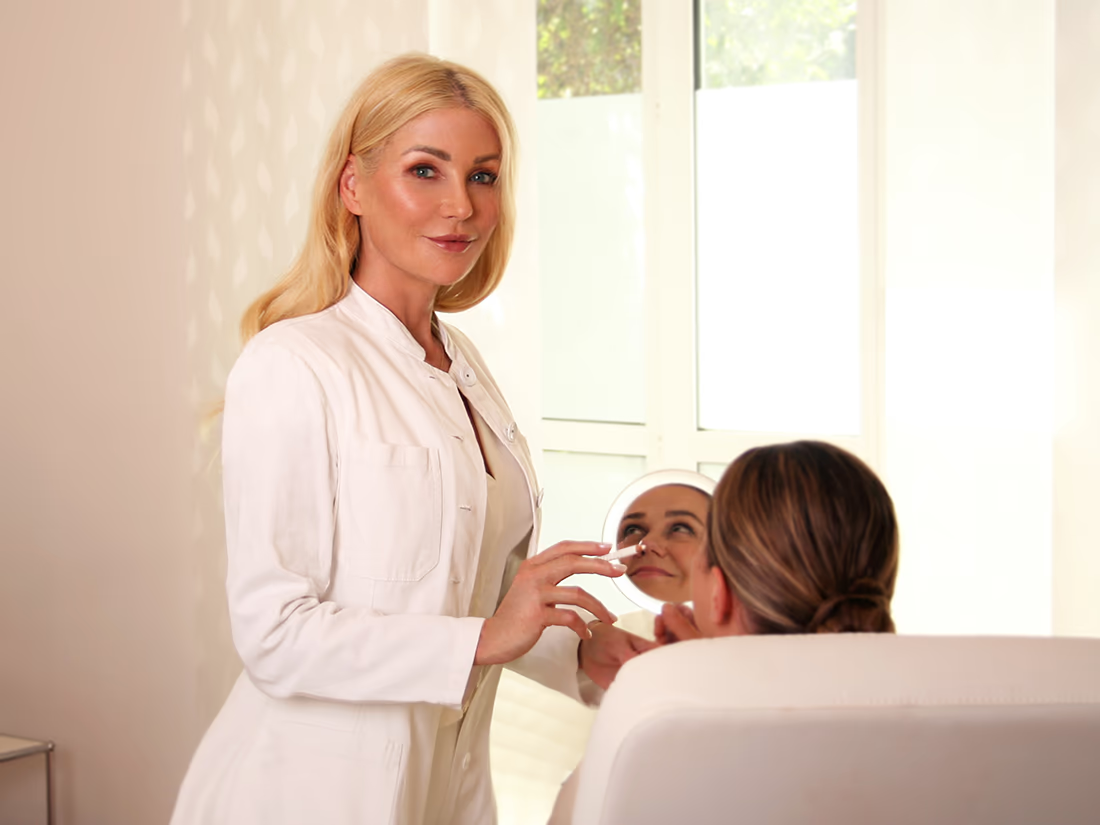
At my medical practice, LIPS and SKIN in Munich, I use Botox specifically to treat dynamic facial lines. The goal is a soft, natural relaxation of facial expression. The face should still look animated and expressive, but less tense. A warm, natural expression should always be preserved.
Botox can achieve very good results, especially for dynamic expression lines. Common treatment areas include forehead lines, frown lines, and crow’s feet. In addition, botulinum toxin can also be used to help with certain functional concerns, such as bruxism, migraines, masseter treatment, or excessive sweating.
Botox At a Glance
- Treatment type: Injectable treatment with botulinum toxin type A to relax specific facial expression muscles
- Treatment time: Usually about 15–30 minutes
- Downtime: Typically none; most patients can return to daily activities right away
- Onset of effect: Initial results within a few days; full effect after approximately 10–14 days
- Duration of results: Typically 3–6 months
- Anesthesia: Usually not required
- Possible side effects: Mild redness, swelling, or small bruises, usually temporary
- Treatment areas: Forehead lines, frown lines, crow’s feet, bunny lines, chin, corners of the mouth, gummy smile, masseter, and underarms for excessive sweating
- Key feature: Highly precise dosing for a natural-looking result
- Not suitable for: Pregnancy, breastfeeding, certain neuromuscular disorders, active infections in the treatment area, or known hypersensitivity
What Is Botox?
Botox is the widely known brand name for botulinum toxin type A. It is an active ingredient that selectively reduces the activity of specific muscles. In aesthetic medicine, Botox is primarily used to soften dynamic expression lines.
Dynamic lines are caused by repeated muscle movement. When a muscle repeatedly folds the skin in the same area, the crease can become more pronounced over time. This is where Botox works. It temporarily relaxes the muscle responsible for the line, allowing the overlying skin to smooth out.
The effect, however, is not permanent. Over the course of several months, the body gradually breaks down the effect. For this reason, treatment needs to be refreshed regularly to maintain ongoing wrinkle reduction.
Who Is a Good Candidate for Botox Treatment?
Eine Botox-Behandlung eignet Botox treatment is especially well suited for patients whose dynamic expression lines make them look more tired, stern, or tense than they actually feel.
Common reasons for treatment include:
- Forehead lines
- Frown lines between the eyebrows
- Crow’s feet at the outer corners of the eyes
- A tense or stern facial expression
- Strong eyebrow contraction
- Fine expression-related crepiness
- Gummy smile
- Unwanted chin tension
- An overactive masseter muscle
- Excessive sweating
What matters most to me is this: Botox has to fit the face. Not every line needs to be treated, and not every muscle movement should be completely blocked. A good result is not defined by a face that no longer moves; it is defined by a face that looks fresher, softer, and more harmonious.
My Approach to Botox in Munich
At LIPS and SKIN in Munich, the focus is on natural-looking results. I do not perform Botox treatments according to a fixed template, but rather based on each patient’s facial anatomy, facial expression, and personal goals.
Before every treatment, I carefully assess:
- How does the forehead move?
- How strongly does the frown line contract?
- What is the natural position of the eyebrows?
- Is there already a slight asymmetry?
- How much facial movement should be preserved?
- Which areas should preferably not be treated?
- What dose makes sense without overcorrecting?
With Botox in particular, dosing makes a major difference. Too little may produce barely visible results. Too much can look unnatural. That is why I prefer a precise and controlled approach. Once the full effect has developed, a small touch-up can be performed if needed.
My goal is a result that does not look obvious, but simply looks good.
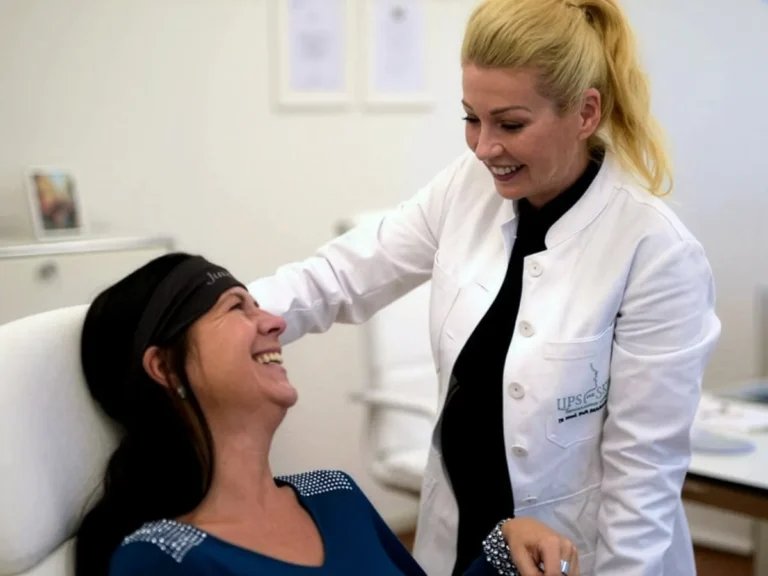
Which Areas Can Be Treated with Botox?
Botox can be used in various areas of the face, as well as for certain functional concerns. The following indications are among the most common treatments in my practice:
Forehead Lines
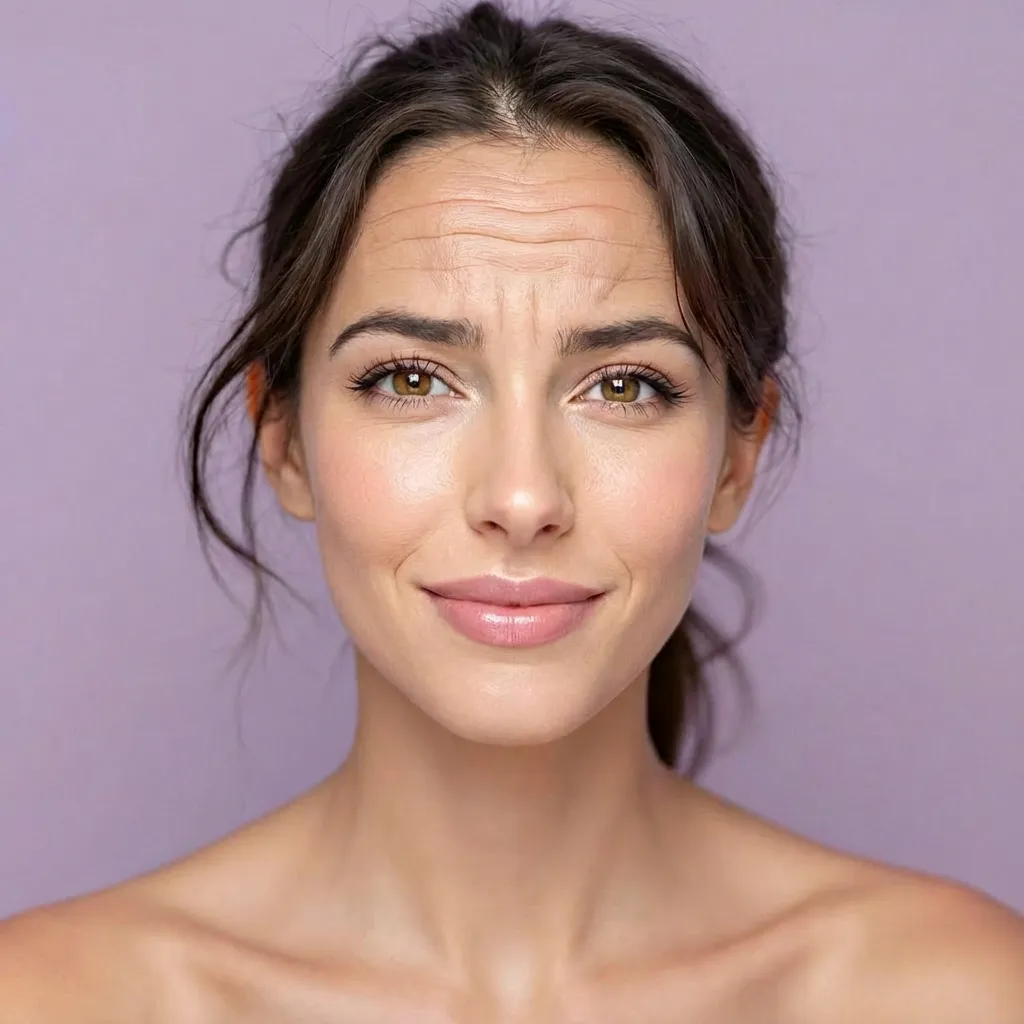
Forehead lines develop when the eyebrows are raised. They appear as horizontal lines across the forehead. Treatment with Botox can smooth the forehead and make the facial expression appear more relaxed.
The forehead requires particular caution. If it is treated too strongly, the forehead may feel heavy or the eyebrows may drop. For this reason, I dose this area very deliberately. The forehead should look more relaxed, but not frozen. Certain facial movements, such as raising the eyebrows, should still be possible.
Frown Lines
Frown lines are located between the eyebrows. They develop when we pull the brows together. This often happens when focusing intensely, and especially during prolonged screen time. A pronounced frown line can make many people look stern, angry, or tired, even when they do not feel that way.
Botox can reduce muscle activity in this area. The frown line becomes softer, and the eyes can appear more open and approachable. In cases of deeper, long-standing frown lines, it may make sense to combine Botox with a very conservative hyaluronic acid filler treatment. This is always decided on an individual basis.
Crow’s Feet
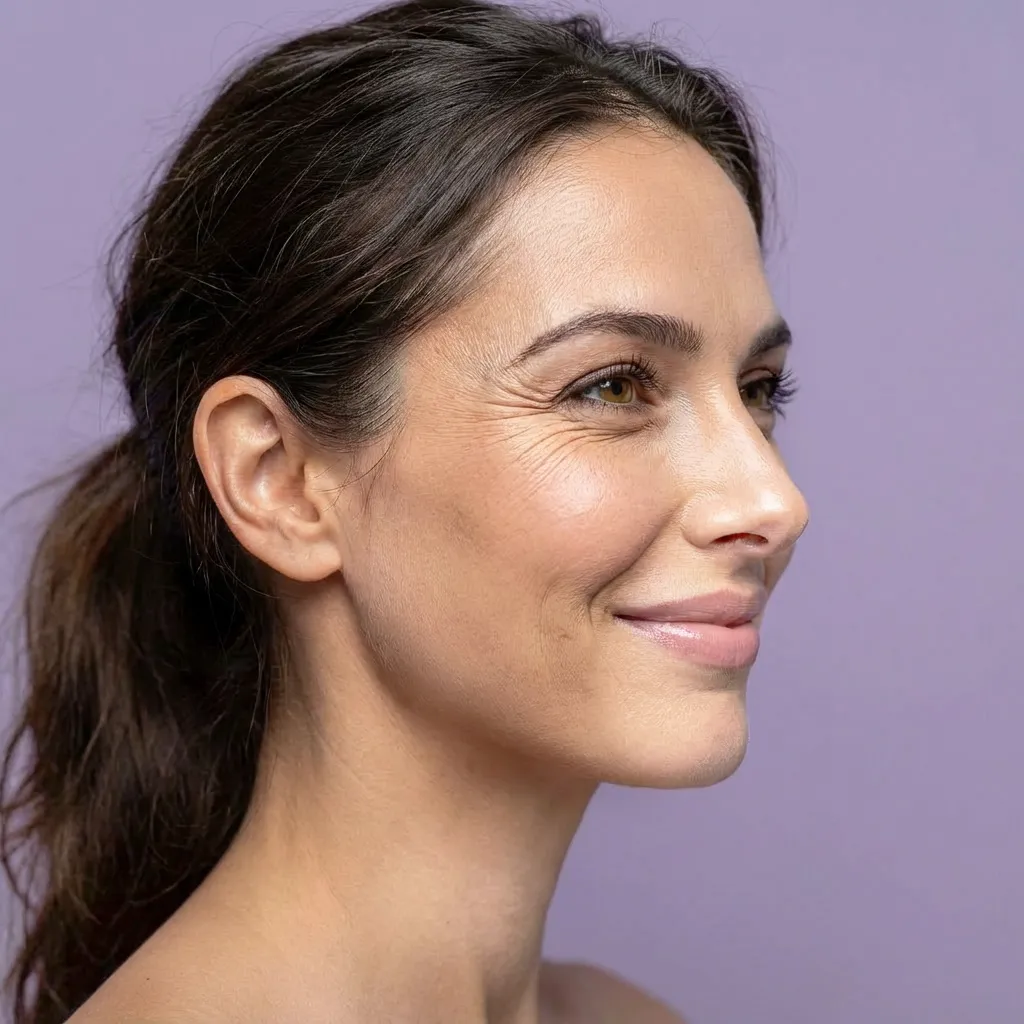
Crow’s feet are smile lines at the outer corners of the eyes. They are part of a natural facial expression. However, when they become very deep or remain clearly visible at rest, Botox can help soften them.
I treat this area in a way that preserves a natural smile. The goal is not to completely immobilize the eye area. It should look fresher and smoother, while still appearing natural.
Bunny Lines
Bunny lines are small lines on the sides of the nose. They develop when the nose wrinkles during smiling or speaking. A small amount of Botox can often soften them effectively.
Precise dosing is especially important in this area, as it is small and closely connected to the surrounding facial expression.
Botox Brow Lift
In selected cases, Botox can support a subtle lifting effect of the eyebrows. This is done by treating muscles that pull the brow downward. As a result, the eye area can appear slightly more open.
A Botox brow lift does not replace surgery or a more pronounced lifting procedure. However, in patients with suitable anatomy, it can help create a fresher, more awake appearance. For a more noticeable lifting effect, it can be combined with a thread lift of the eyebrows.
Lip Lines and the Perioral Area
Very fine lines around the mouth can sometimes be treated with Botox. A very conservative approach is important here, because the mouth is highly sensitive for speaking, eating, drinking, and facial expression.
In many cases, hyaluronic acid filler is better suited for lip lines. Sometimes, a very small dose of Botox can be useful as an adjunct. I always discuss this individually with my patients.
Corners of the Mouth
When the corners of the mouth turn downward, the face can appear sad or tired. If the underlying muscle activity is suitable, Botox can slightly reduce this downward pull.
Here, too, the result should be subtle. The goal is not an artificial smile, but a more relaxed expression.
Dimpled Chin
A dimpled chin appears as small dimples or an uneven texture on the chin. It is usually caused by an overactive mentalis muscle. Botox can relax this muscle, making the chin appear smoother and calmer.
This treatment usually requires only very small amounts of Botox, but it can still be very effective.
Gummy Smile
With a gummy smile, a significant amount of gum tissue is visible when smiling. If the upper lip is pulled up too strongly, a small dose of Botox can help.
The treatment aims to reduce excessive elevation of the upper lip when smiling. The smile is preserved, but appears more balanced. Very precise placement is important to avoid an unnatural-looking smile.
Masseter Botox for Bruxism and a Wide Jaw

The masseter is the large chewing muscle located along the side of the jaw. In some patients, this muscle is particularly pronounced. This can be caused by teeth grinding, jaw clenching, or high muscle activity.
Botox can relax the masseter muscle. This may help with bruxism and can make the jawline appear softer. In some patients, the lower third of the face may also appear slimmer as a result.
This treatment requires experience, because both function and aesthetics need to be taken into account.
Botox for Excessive Sweating
Botox can also be used to treat excessive sweating, especially in the underarm area. The active ingredient temporarily blocks the nerve signals to the sweat glands.
This is not a classic wrinkle treatment, but it can provide significant relief for affected patients. Before treatment, it should be clarified whether true hyperhidrosis is present and whether Botox is an appropriate option.
Botox for Chronic Migraine
Botox can also be used for chronic migraine. In this case, it is not a cosmetic wrinkle treatment, but a medical use of botulinum toxin.
Treatment may be considered primarily when migraines occur very frequently and other measures have not provided sufficient relief. Chronic migraine typically involves headaches or migraine attacks on many days each month. Whether Botox is suitable must therefore always be carefully assessed by a physician.
The injections are not placed in just one area, but follow a specific treatment protocol with multiple injection points across the head, forehead, temples, neck, and shoulder region. The goal is to reduce the frequency and intensity of migraine attacks.
It is important to understand that Botox does not help with every type of headache. The effect also does not occur immediately. In many cases, it is only possible to assess the response after several weeks. In my practice, I discuss in detail beforehand whether the criteria for treatment are met and what expectations are realistic.
Baby Botox and Micro-Botox
Many patients today want very subtle results. For this reason, terms such as Baby Botox and Micro-Botox are being used more and more frequently. However, they do not mean the same thing.
What Is Baby Botox?
Baby Botox generally refers to Botox treatment using a lower dose. Facial movement is preserved to a greater degree, and the result is often softer and more subtle.
Baby Botox is especially suitable for patients who are trying Botox for the first time or who want a very natural-looking effect. It may also be a good option for younger patients with early dynamic expression lines.
What Is Micro-Botox?
Micro-Botox is typically placed more superficially and in very small amounts. The goal is less about treating individual strong muscles and more about creating a refined improvement in skin texture. For this reason, the treatment is also known by the English terms Skin Botox or Skintox.
Depending on the individual findings, Micro-Botox may be useful for fine lines, enlarged pores, or oily skin. However, it is not suitable for every patient and does not replace a classic Botox treatment when pronounced muscle activity is present.
What to Expect During Botox Treatment at LIPS and SKIN in Munich
Botox treatment at LIPS and SKIN always begins with a personal consultation. I want to understand what bothers you and what type of result you are hoping to achieve. I then assess your facial movement and explain which treatment approach makes sense.
The process is usually straightforward:
- Consultation and medical history
- Assessment of facial expression
- Discussion of the treatment areas
- Determination of the appropriate dose
- Skin disinfection
- Precise injections with a fine needle
- Brief review of aftercare instructions
The treatment usually takes only 15 to 30 minutes. Anesthesia is typically not necessary. The injections are quick and generally well tolerated.
After treatment, minor redness, mild swelling, or small bruises may occur. These are usually temporary.
When Does Botox Start Working?
Botox does not work immediately. Initial changes usually become noticeable within 2 to 5 days. The full effect is typically visible after about 10 to 14 days.
This is important to know because the result cannot be properly assessed immediately after treatment. Any follow-up assessment should also take place only once the full effect has developed.
How Long Does Botox Last?
The effects of Botox typically last 3 to 6 months. The exact duration varies from person to person.
It depends on several factors, including:
- Treatment area
- Muscle strength
- Metabolism
- Dose
- Facial movement patterns
- Physical activity level
- Previous Botox treatments
In some patients, Botox wears off somewhat sooner; in others, it lasts longer. Once the effect begins to fade, treatment can be repeated. die Behandlung wiederholt werden.
Botox or Dermal Filler – What Is the Difference?
Botox and hyaluronic acid fillers are often confused with each other. Both are used in aesthetic medicine, but they work in completely different ways.
Botox relaxes muscles. It is especially suitable for dynamic lines caused by facial movement, such as forehead lines, frown lines, and crow’s feet.
Hyaluronic acid is a dermal filler. It can restore volume, enhance contours, and soften static wrinkles or folds. Common treatment areas include the lips, cheeks, nasolabial folds, marionette lines, and areas of volume loss.
Put simply:
- Botox treats movement.
- Hyaluronic acid filler treats volume and structure.
In some cases, a combination of both can be useful. For example, Botox can reduce muscle activity, while hyaluronic acid filler can improve deeper etched-in lines or volume loss. I always make this decision based on an individual facial assessment.
Will Botox Make Me Look Artificial?
Not when Botox is used correctly.
An artificial or frozen-looking result, often referred to as a “Botox fail,” usually occurs when the dose is too high, the placement is incorrect, or the treatment plan does not fit the patient’s face. That is why a precise facial assessment is so important.
In my practice, I deliberately treat in a way that preserves natural facial expression. You should not look different after treatment. You should look fresher, more rested, and more relaxed. You should still be able to smile warmly or raise your eyebrows. In one word: you should still look approachable.
Many good Botox results are not recognizable as Botox. The face simply looks softer and more relaxed. At my practice in Munich, I am proud that many of my Botox patients are delighted by how natural their results look.
What Should You Keep in Mind After Botox?
After treatment, you should initially leave the treated area alone.
On the day of treatment, I recommend:
- Do not apply strong pressure to the treated areas
- No facial massage
- No exercise immediately after treatment
- No sauna
- No tanning bed
- No excessive alcohol consumption
- Do not lie flat immediately after treatment
- Apply makeup only after a short waiting period and with care
These recommendations help reduce the risk of small bruises and avoid unnecessarily interfering with the treatment.g zu beeinflussen.
Botox Cost in Munich
The cost of Botox treatment depends on the area being treated and the amount of product required. At my practice in Munich, Botox is not billed at a fixed price per unit, but strictly in accordance with the official German medical fee schedule for physicians (GOÄ) — legally compliant and transparent.
For general guidance, you will find an overview below with estimated prices for individual treatment areas. These fees include the product, the injection treatment, the consultation, and an optional follow-up assessment.
Table can be scrolled horizontally
| Botox | Price (indicative, incl. VAT) |
|---|---|
| Frown line | 195-225 € |
| Forehead wrinkles | 195-225 € |
| Crow’s feet | 225-255 € |
| Frown line + forehead wrinkles | 360-420 € |
| Frown line + forehead wrinkles + brow lift | 395-445 € |
| Frown line + forehead wrinkles + crow’s feet | 575-625 € |
| Frown line + forehead wrinkles + crow’s feet | 625-675 € |
| Brow lift | 78-98 € |
| Bunny Lines | 78-98 € |
| Nosetip lift | 78-98 € |
| Perioral lines | 78-98 € |
| Gummy Smile | 78-98 € |
| Strawberry chin | 78-98 € |
| Platysma | 350-420 € |
| Micro-Botox Cheeks | 295-325 € |
| Consultation | 75 € |
The prices listed are intended as general guidance. The exact cost will be discussed transparently before treatment.
Why Choose LIPS and SKIN in Munich for Botox?
Botox is not just about the product itself. It is first and foremost about experience, anatomy, dosing, and an eye for natural-looking results.
At my practice in Munich, I take the time for a personal facial assessment. I do not look at individual lines in isolation, but at the entire face. Every Botox treatment subtly changes the balance of facial muscle activity.
Patients choose LIPS and SKIN because they want physician-performed treatment that looks natural and not overdone.
What matters to me:
- Personal consultation
- Treatment performed by a physician
- Precise assessment of facial expression
- Individualized dosing
- Natural-looking results
- Transparent pricing
- Honest recommendations
- No treatment if it does not make sense
Botox can achieve a great deal. But it has to be used correctly..

Consultation and Scheduling
Would you like to find out whether Botox is the right treatment for you? I will provide an individual and honest consultation.
All you need to schedule an appointment is an email address and a phone number.
FAQ – Frequently Asked Questions About Botox in Munich
The first effects usually become noticeable within 2 to 5 days. The full effect is typically visible after about 10 to 14 days. For this reason, the result should not be assessed on the day of treatment.
Botox typically lasts 3 to 6 months. After that, the effect gradually wears off. The duration varies from patient to patient and depends on factors such as muscle activity, metabolism, dosage, and the treatment area.
The cost depends on the treatment area and the amount of product required. Smaller areas, such as frown lines, forehead lines, or crow’s feet, are often approximately €290–€320. Combination treatments or larger areas cost more accordingly. The exact price will be discussed before treatment.
Botox is especially suitable for dynamic expression lines. These include forehead lines, frown lines, crow’s feet, bunny lines, and certain fine lines around the mouth or chin. For wrinkles caused by volume loss, hyaluronic acid filler is often the better option.
Botox relaxes muscles. Hyaluronic acid filler restores volume or enhances facial contours. Botox is primarily used for dynamic expression lines. Hyaluronic acid filler is typically better suited for volume loss, deeper static lines, the lips, cheeks, or facial contouring.
A natural-looking result is possible when Botox is dosed appropriately and placed precisely. At LIPS and SKIN, the goal is not a frozen face, but a fresher, more relaxed appearance while preserving natural facial expression.
Baby Botox generally means that a lower dose of Botox is used. This creates a more subtle effect, while facial movement is preserved to a greater degree. This approach is especially suitable for patients who want a very natural-looking result.und Patienten, die ein sehr natürliches Ergebnis wünschen.
Micro-Botox is used in very small amounts and is often placed more superficially. Depending on the skin type, it may help improve fine lines, pores, or oily skin. However, it does not replace a classic Botox treatment for stronger muscle activity.
Yes, if the gummy smile is caused by overactivity of specific muscles. A small dose of Botox can reduce how strongly the upper lip lifts when smiling. This often creates a more balanced-looking smile.
Yes. A dimpled chin is often caused by tension in the mentalis muscle. Botox can relax this muscle, which can make the chin appear smoother and less tense.
Botox can help with excessive sweating, especially in the underarm area. The active ingredient temporarily reduces sweat gland activity. Before treatment, it should be determined whether hyperhidrosis is present and whether Botox is an appropriate option.
Botox can relax the masseter muscle. This may be helpful for teeth grinding or strong jaw clenching. At the same time, a very prominent jaw area may appear slightly slimmer. The treatment should be planned carefully.
There are several possible reasons. Sometimes the dose was too low, the muscle was very strong, or the expectations were too high. In rare cases, reduced responsiveness to botulinum toxin may also play a role. In most cases, the likely cause can be assessed well during a follow-up visit.
Botox is not recommended during pregnancy or breastfeeding. Even though no clear harm has been proven, the precautionary principle applies. Treatment should be planned only after pregnancy and breastfeeding.
You should avoid exercise on the day of treatment. Sauna, tanning beds, intense heat, and facial massages should also be avoided initially. In most cases, normal daily activities can be resumed the next day, unless otherwise discussed.
Mild headaches may occur after Botox treatment. They are usually temporary. If symptoms are unusual or severe, a physician should be consulted.
This is rare, but possible. It can happen if Botox is dosed or placed unfavorably. This is why precise knowledge of anatomy is especially important when treating the forehead and eye area.
A follow-up appointment is usually useful after about 10 to 14 days, once the full effect has developed. At that point, it can be assessed whether the result is balanced or whether a small adjustment may be appropriate.
Botox is a medical treatment. It should be performed in an appropriate clinical setting, with a medical history review, informed consent, proper hygiene, and physician oversight. A Botox party does not provide the right environment for this type of treatment.
Yes, Botox can be repeated regularly if it is well tolerated. The interval depends on the duration of effect, the treatment area, and the patient’s individual preferences. In most cases, maintenance treatment is performed after several months.
There is no fixed age. What matters is not the number, but the individual findings. Some people develop dynamic expression lines early, while others develop them much later. Treatment should only be performed when it truly makes sense.
It depends on the type of wrinkle. Early dynamic expression lines can often be softened very effectively. Deeper lines that are visible even at rest may improve, but they do not always disappear completely. In some cases, a combination with hyaluronic acid filler or other treatments may be useful.
Makeup should not be rubbed in firmly immediately after treatment. After a short waiting period, gentle application is usually possible. It is important not to massage the treated areas.
The effect will gradually wear off over the course of several months. Muscle activity returns, and the face will look the way it did before treatment, or continue to age naturally over time.
Yes, Botox can help with chronic migraine when certain medical criteria are met. In this case, it is not used like a cosmetic wrinkle treatment, but injected according to a specific protocol at multiple points across the head, forehead, temples, neck, and shoulder area. The goal is to reduce the frequency or intensity of migraine attacks. Whether this treatment is appropriate should always be assessed individually by a physician.

About the Author:
Dr. med. univ. Eva Maria Strobl is the owner of LIPS and SKIN Aesthetic Medicine practice in Munich. She is a trained specialist in general medicine (MedUni Vienna) and has over 10 years of specialization in non-surgical aesthetic procedures. Dr. Strobl is a member of the German Society for Aesthetic Botulinum Therapy e.V. (DGBT), the German Society of Anti-Aging Medicine e.V. (GSAAM) and of Network Global Health. She publishes regularly on her blog and on DocCheck.
Sources for This Content:
Sommer et al, Botulinumtoxin in der ästhetischen Medizin, Thieme
Camargo et al, Botulinum toxin type A for facial wrinkles, Cochrane Library